
Screen Fatigue: How and why today’s workforce is embracing the printed page
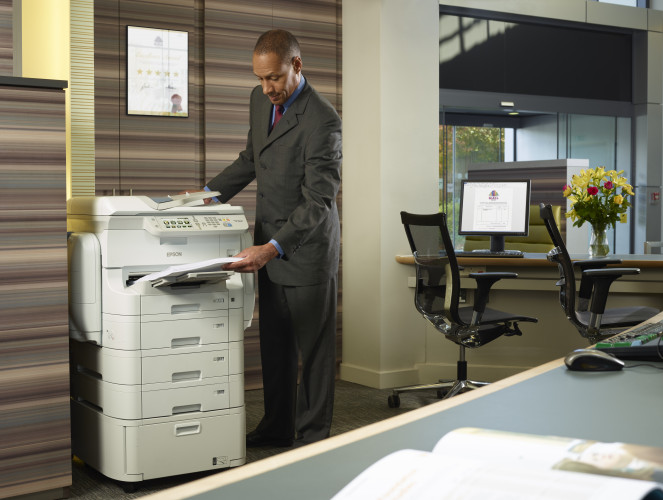
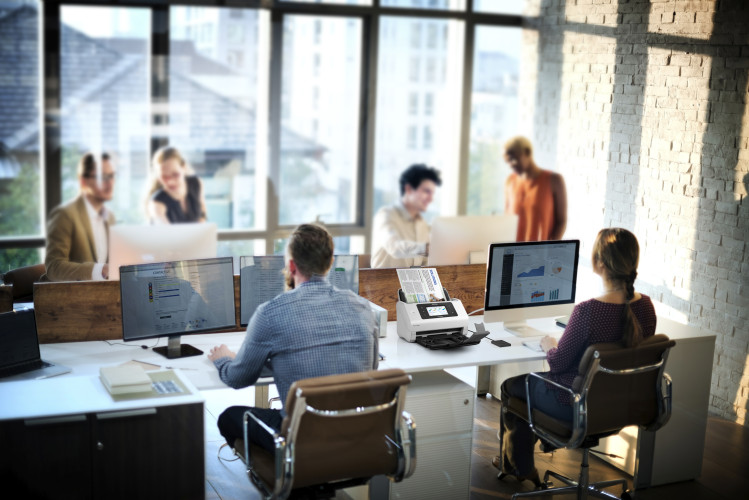
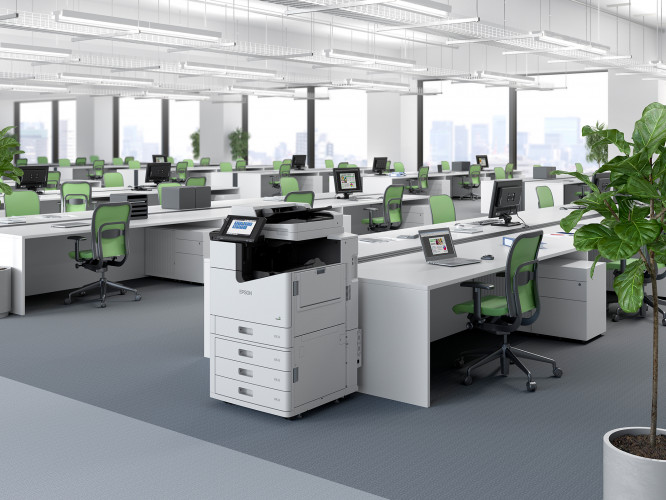
We are the on-screen generation. The rise of tablets, e-readers and smart phones – with increasing screen quality – means we are doing more with our screens than ever before. This is especially true for ‘screenagers’, the younger generation, who have grown up in a screen-based culture of social media and mobile devices. Yet even in today’s digital society, paper still plays a major part in how we work. In fact, according to a 2017 survey of over 2,400 office workers across EMEA commissioned by Epson Europe, XX percent of employees use printers at least daily and those who do print XX items on average, which equates to around XX pages each day[1].
[1] Coleman Parkes Research Ltd., commissioned by Epson, 2017
Does our reliance on paper in the workplace mean we’re all craving a break from staring at a screen, or is there a more scientific explanation behind paper’s longevity? And do we as readers, process information on paper differently than we do on screen?
When looking to scan or read quickly, on-screen reading is a good alternative to reading from paper. But it can be seen time and time again, from schools to offices, that people still turn to paper for thoughtful and careful reading.
In the workplace, the most popular printed items include reports and brochures, which employees say make up XX percent of all items they print in a typical day[1]. This can probably be explained by the fact that these items are typically text heavy and are often used to guide decision-making processes, requiring a comprehensive understanding of the text. Furthermore, as reports and brochures are often external documents, they are more likely to be edited and treated with extra attention.
[1] Coleman Parkes Research Ltd., commissioned by Epson, 2017
Email attachments (XX percent) and surprisingly emails themselves (XX percent)[1] are also frequently printed. With a continuous stream of email traffic, it is easy to imagine why important emails and attachments that require closer attention are printed off – especially as email is a dominant form of communication in the workplace today. In fact research shows that the number of business emails sent and received per user, per day, reached an estimated 123 emails during 2016[2]. This figure is expected to grow to an average 126 messages sent and received per business user, per day, by the end of 2019[3].
[1] Coleman Parkes Research Ltd., commissioned by Epson, 2017
[2] The Radicati Group, Inc. Email Statistics Report, 2015-2019
[3] The Radicati Group, Inc. Email Statistics Report, 2015-2019
Furthermore, employees highlighted that they typically print items especially to share/hand out (XX percent), read (XX percent) and edit/annotate (XX percent)[1]. The last point is emphasised by XX percent of employees believing ‘there is more chance of making errors editing an electronic document than a editing a print out’[2].
[1] Coleman Parkes Research Ltd., commissioned by Epson, 2017
[2] Coleman Parkes Research Ltd., commissioned by Epson, 2017
Scientific research, although in its early stages, backs up the ongoing appeal of paper, demonstrating that reading from print results in much higher levels of comprehension, learning, information retention and ease of use, in part down to our subconscious feeling from the brain that enables better understanding of text from a known source, in this case paper.[1] This can be partially explained by the reader’s ability to move through text in a non-linear fashion – the opposite of reading in a linear fashion on screen – and being able to flick through pages with ease. Screen technology is currently unable to replicate this tactile experience, even with the advent of flip books on reading devices or flip page magazine PDFs online. Some scientists even go as far as arguing that simply feeling the paper also supports comprehension of text – known in a 2011 study by Gerlach and Buxmann as “haptic dissonance”, referring quite literally to “grasping something” [2].
[2] Gerlach, J., & Buxmann, P. (2011). Investigating the acceptance of electronic books – the impact of haptic dissonance on innovation adoption. ECIS 2011 Proceedings. Paper 141. Retrieved January 5, 2015, from: http://is2.lse.ac.uk/asp/aspecis/20110145.pdf
Furthermore, several other academic studies (Wastlund, Reinikka, Norlander and Archer) reveal that the brain is under much more stress when reading from a screen, becoming tired more rapidly, when compared to reading from paper. In fact, studies have shown the brain can function for a much longer period when reading from paper[1], with screens draining more of the brain’s resources during the reading experience, making the comprehension of information more difficult.
Moreover, reading on interactive devices requires more discipline as it fosters distraction. An email may appear while proofreading or we may be tempted to leave the document to browse the internet, which is available in a split second with a click of the mouse or a finger tap. When working on paper, there is less opportunity for distraction and readers are less likely to multi-task. In fact, a survey of college students found that 90 percent were likely to multi-task while reading on screen versus only one percent who said they would multitask when working with a hard copy[1]. This might be explained by the fact that paper documents are often perceived as being more authoritative and serious compared their digital counterparts, requiring the reader’s full attention. When a 200-word report lands on your desk, the weight and size of the document will likely command more authority than a soft copy of the same document.
In order to be productive, we must determine what works for us as individuals, and in which instances working on-screen or off-screen is the best choice. But, in the words of Futurist Jack Uldrich, “every technology has unique and tangible benefits, and paper is no different. Arguably, paper is the greatest instrument ever invented for conveying, sharing and disseminating information.” On that basis, it is safe to say that paper-based documents will continue to be vital in terms of helping employees work effectively.